


From thousands of agents exploring the Navier–Stokes problem to Astra modeling in Blender and operating robot arms, recent events have brought the Bitter Lesson back to mind. Why do general methods keep pushing beyond their boundaries, and what part does the hardware lottery play?

XDU -> WHU
Data Science
LLM Agents
Evaluation/Benchmark
iOS Dev
Game Client Dev
-
Who Should I Be When Taking a Recruitment Personality Assessment?
I’ve taken a lot of personality assessments while looking for a job recently, and I want to understand how they reach their conclusions. I also want to talk about a question that makes answering them a little tricky: should I describe my everyday self, my working self, or the person the company wants? Could I invent a persona that would get a perfect assessment result?
-
Interview Preparation: Questions, Answers, and Questions to Ask
An evolving collection of potential interview questions, prepared answers, and questions to ask interviewers.
-
Does a 30/30/30+10 Portfolio Really Diversify China A-Shares?
This is a personal index-FOF experiment: a 30/30/30 China A-share core with 10% in cash, gold, or the STAR 50, backtested as a reference for my own future investing.
-
How I Build RAG: From Project Experience to a Systematic Approach
This article has moved to the Build Your Own RAG repository. Please visit the repository for the tutorials and examples.
-
The AI Replacing Front-End Engineers Can't Build the Simplest Panel in a Game
The same model spins up a web interface in minutes, yet even with a design mockup in hand, it still struggles to produce a game UI file you can actually use. How should AI agents enter the UI workflow? Why have most teams not only failed to simplify the pipeline, but ended up creating new work for everyone else on it? And in what direction, along which technical path, should AI-assisted UI workflows develop? Starting from a few simple examples, this post looks at where the core problems and bottlenecks really are, and what we should be doing next.
-
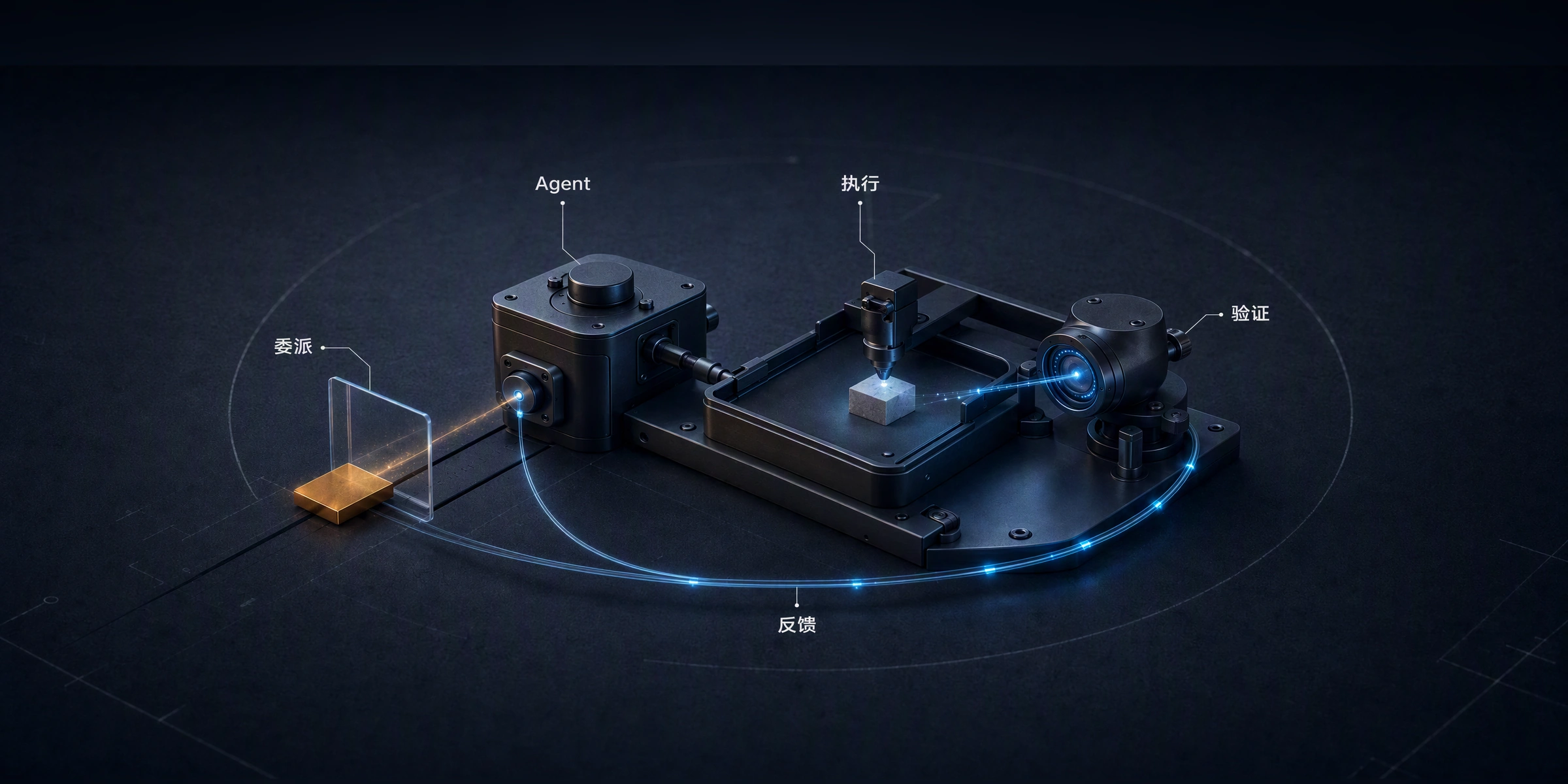
What Problems Are We Really Solving When We Build AI Agents?
Starting from several experiences building AI agents, this essay looks back at how both the definition of an AI agent and the work of building one have changed over the past two years. What are people handing over to AI, in what form, and how should we constrain an inherently open-ended probabilistic model? From first principles, it examines delegation, boundaries, and judgment—what we are actually doing when we build AI agents, and the problems we are truly trying to solve.
-
How AI Agents Got Here: Where We Thought the Bottleneck Was
From 2024 to 2026, AI agents did not advance in a straight line. Each year was a guess about where the bottleneck was, and most of the budget and headcount went to whichever layer we guessed. Prompt, RAG, Workflow, Tools, Context, models and new vocabulary, evaluation—seven guesses, each growing its own tools, terms, and projects. This essay revisits that road.
-
Why Enterprise AI Gets Stuck in Pilots: Systems, Workflows, and Organizational Absorption
Enterprise AI gets hard after the model is connected: a task still needs clear handoffs, acceptance criteria, exception handling, and accountability before it becomes repeatable value.
-
When AI Stops Answering and Starts Doing: Anthropic Economic Index Report: Cadences
Anthropic’s latest Economic Index does not show how many jobs AI has replaced. It shows how work is first changing from chat and assistance into deliverables and deeper task delegation.